

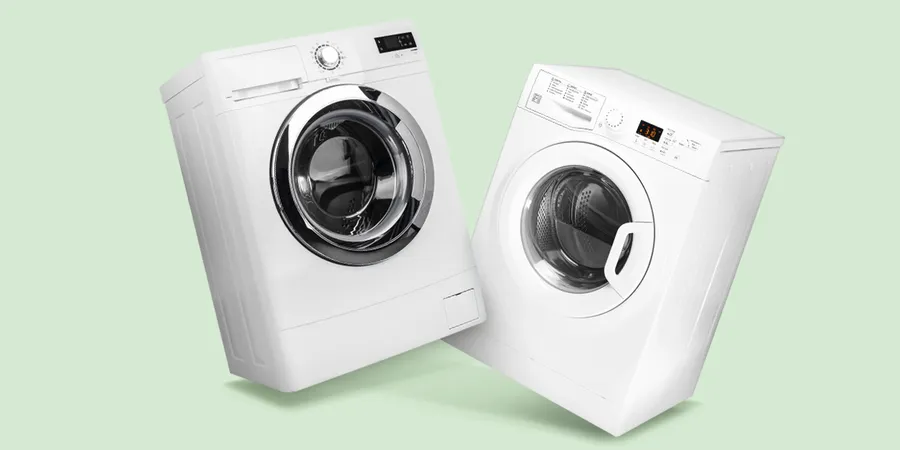
Your washing machine was running fine yesterday. Today, it won’t drain, or maybe it’s making that grinding noise you’ve been ignoring for weeks. Now you’re standing in front of it, wondering whether to call someone or start shopping for a new one.
Before you haul anything to the curb, take a breath. Most washing machine problems have straightforward fixes, and washing machine repair often costs a fraction of what replacing it would cost. The trick is knowing what’s actually wrong and whether it’s worth fixing.
Why Do Washing Machines Fail?
Washing machines handle a brutal workload every single day. They fill with water, agitate heavy fabrics, spin at high speeds, and drain hundreds of gallons monthly. Given that kind of stress, parts eventually wear out.
Common Causes of Failure
- Mechanical wear and tear from drum bearings, drive belts, motor couplings, and shock absorbers breaking down over the years of use
- Electrical component failures, including control boards, sensors, and switches that fail from power surges, moisture, or age
- Water system issues such as inlet valves failing, drain pumps clogging, door seals deteriorating, and hoses cracking
- User-related problems like overloading the drum, usingthe wrong detergents, or skipping routine maintenance
The Most Common Washing Machine Problems
Knowing what typically goes wrong helps you identify issues faster and communicate clearly when you call for washing machine repair service.
- Machine won’t drain usually points to a clogged drain pump, kinked hose, or failed pump motor
- Excessive vibration suggests unbalanced loads, worn shock absorbers, or levelling legs that need adjustment
- Strange noises like grinding indicate bearing wear, squealing means belt issues, and banging comes from loose components
- Water leaking from the front often traces to door seals, while rear leaks typically involve hose connections
- Drum won’t spin usually means a faulty lid switch, broken drive belt, or worn clutch assembly
- Musty odours come from moisture trapped in seals and bacterial growth, especially in front-loading machines
When Washing Machine Repair Makes Sense
Not every problem requires a new machine. Many common failures have affordable fixes that extend your washer’s life for years.
The 50% Rule
Industry professionals recommend this guideline: if the repair costs less than 50% of a comparable new machine, the repair usually makes sense. A $200 repair on a machine worth $600 is reasonable, while a $400 repair on the same machine probably isn’t.
Repairs That Are Usually Worth It
- Drain pump replacement runs $150 to $300 and is almost always worthwhile since pumps fail commonly but are easy to replace
- Door seal replacement costs $150 to $250 and extends machine life considerably
- Belt replacement is affordable at $75 to $150 because drive belts are inexpensive parts
- Inlet valve replacement runs $100 to $200 and addresses a common failure point
- Lid switch or door latch repairs cost $100 to $175 for parts that fail frequently
How the Machine Age Affects Your Decision
- Less than 3 years old means almost always repair, unless costs exceed 50% of replacement value
- 3 to 7 years old is the prime service window where most repairs make financial sense
- Machines aged 7 to 10 years require careful repair consideration, as major failures may indicate more issues.
- Over 10 years old makes major repairs harder to justify, though minor fixes remain reasonable
When Replacement Is the Better Choice
Sometimes repair doesn’t make financial sense, and knowing when to replace prevents throwing money at a lost cause.
Signs You Should Replace Instead of Repair
- Multiple components failing at once means repair costs add up quickly and approach replacement prices
- Major failures in older machines, like transmission problems ($400 to $600) or drum damage ($300 to $500), rarely justify the expense
- Frequent repair history signals declining reliability, and if you’ve had three service calls in the past year, a fourth probably isn’t your last
- Parts becoming unavailable for discontinued models make repair impractical, regardless of cost
- Energy efficiency gains from modern machines sometimes justify replacement through lower operating costs
Preventing Future Problems
Proper use and maintenance extend your machine’s life and reduce washing machine repair frequency.
- Avoid overloading because stuffing the drum stresses every mechanical component
- Balance your loads by distributing heavy items evenly to prevent vibration damage
- Use the right detergent since HE machines require HE detergent to prevent excess suds that damage pumps and electronics
- Clean the drum monthly by running an empty hot cycle with washing machine cleaner or white vinegar
- Wipe door seals after each use and clean weekly to prevent mould growth
- Inspect hoses annually and replace them every 3 to 5 years before they crack or burst
- Leave the door open after washing to let moisture escape
Bottom Line
Washing machine failures are inevitable, but not every problem requires a new appliance. Most common issues in pumps, belts, seals, and switches can be repaired economically, giving your machine years of additional use. When major failures occur in older machines, replacement may be the smarter choice, but understanding the options helps you get the most value from every washer.
Taking prompt action and knowing what repairs make sense can prevent unnecessary costs and reduce household stress. For homeowners seeking a smooth, reliable process, experienced local technicians offer guidance, quick diagnosis, and professional repairs that keep machines running efficiently.
With years of experience helping Charlotte homes, CLT Appliance Repair provides expertise in washer maintenance and repair, offering practical solutions for a variety of brands. Their team handles assessments, repairs, and preventive care efficiently, helping households extend the life of their machines without the usual hassle.