
A cluttered dressing area can make even a well-organized wardrobe feel difficult to use. Clothes collect on chairs, accessories remain on counters, shoes spread across the floor, and half-finished outfits never return to storage. The most effective solution is often redesigning the area around your actual dressing habits instead of creating a perfect system you won’t maintain.
Watch Where Clutter Naturally Collects
Before buying organizers, notice where items repeatedly land. A chair covered with clothing may indicate that you need a temporary place for worn-but-not-dirty garments. Jewelry left beside a mirror may need a tray nearby.
These clutter points reveal missing steps in the room’s storage system.
Browsing functional fashion inspiration can also help distinguish clothing you regularly rotate through outfits from pieces that remain in the dressing area without serving a clear purpose.
Build Storage Around the Dressing Sequence
Think through what you do from the moment you start getting dressed. You may choose underwear first, then clothing, shoes, jewelry, and a bag.
Frequently used items should follow that sequence as closely as practical. Moving back and forth across a room encourages items to be left wherever they were last handled.
| Routine Point | Storage Idea | Useful Result |
|---|---|---|
| Choosing clothes | Open daily section | Faster decisions |
| Adding jewelry | Small mirror-side tray | Fewer loose items |
| Selecting shoes | Low rack or cubbies | Clearer floor |
| Changing outfits | Return basket or hook | Less chair clutter |
Create a Place for In-Between Clothing
One major source of dressing-room clutter is clothing that isn’t clean enough to return immediately to the closet but isn’t ready for laundry.
A dedicated hook, short rail, basket, or small section can solve this problem. Limit its capacity so it doesn’t become permanent storage.
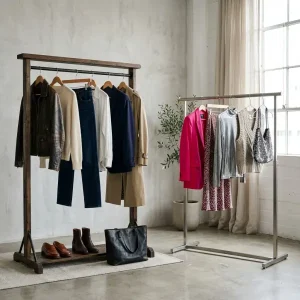
Examples of everyday wardrobe organization can offer ideas for keeping frequently handled pieces visually controlled without hiding everything behind doors.
Reduce the Number of Decisions on Display
Too many visible items can make a dressing area feel cluttered even when technically organized. Open storage works best when it’s selective.
Keep everyday accessories, a small shoe rotation, and current-season clothing accessible. Less-used items can move into drawers, boxes, higher shelves, or another storage zone.
Studying current outfit styling may help you create a smaller active rotation based on the clothing combinations you’re using now rather than keeping every option within immediate reach.
What Makes Dressing Areas Messy Again
A complicated system is difficult to maintain. If putting away a belt requires opening several containers or returning shoes means rearranging a shelf, you’ll eventually stop following the system.
Another mistake is designing storage for appearance alone. Matching boxes look neat, but they don’t help if the items inside are hard to retrieve. Daily actions should require the fewest reasonable steps. Convenience is what keeps the area organized after the initial cleanup.
Frequently Asked Questions
How can I keep clothes from piling on a bedroom chair?
Give worn clothing a specific alternative, such as hooks, a valet stand, a short rail, or a designated basket. Keep that area small so clothing must eventually return to storage or laundry.
Should everything in a dressing area be hidden?
No. Frequently used items can remain visible when open storage makes them easier to access. Hide categories that create visual noise or are used less often, while keeping the active rotation convenient.
How often should I reset my dressing area?
A quick daily reset can prevent clutter from building, while a more complete review every week or two can return misplaced items, clear temporary storage, and adjust the system when your routine changes.
Make Tidiness the Easiest Option
A dressing area stays organized when storage follows behavior instead of fighting it. Place everyday items close to where they’re used, create a temporary home for in-between clothing, and reduce unnecessary steps when putting things away. The strongest system is rarely the most elaborate one. It’s the one you can follow automatically even on a rushed morning.