
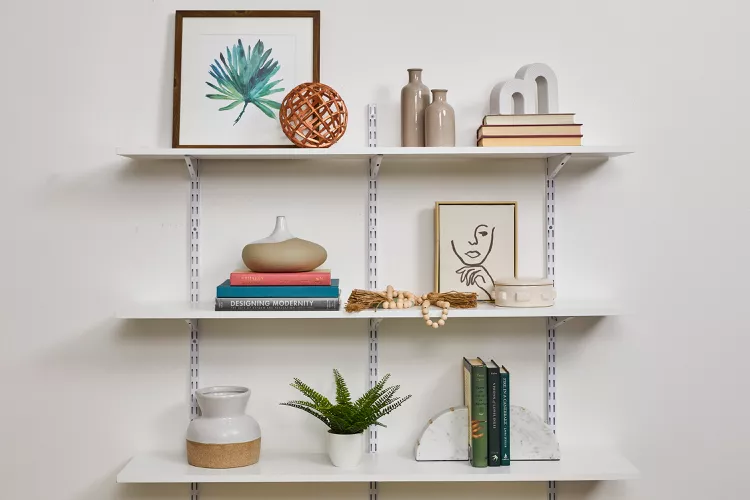
A shelf that sags, tilts, or pulls away from the wall should be unloaded before the problem gets worse. Weak brackets are often caused by loose fasteners, poor anchor selection, excessive spacing, or loads that exceed what the shelf system can safely support. You can often improve the installation without opening or rebuilding the wall.
Find Out What Is Actually Moving
Remove everything from the shelf and press gently on the shelf board. Watch the brackets, screws, and wall surface independently.
If the bracket stays rigid but the board flexes, the shelf itself may be too thin or the span too long. If the bracket pulls away from the wall, the problem is more likely related to fastening.
Homeowners looking through interior storage reading may encounter many shelving arrangements, but reinforcement should start with the actual wall construction and expected load.
Check the Existing Fasteners
Remove obviously loose screws and inspect the holes. A screw driven only into drywall without a suitable anchor may not provide dependable support for meaningful shelf loads.
Whenever possible and appropriate for the installation, fastening brackets into wall framing can provide stronger support. General property research may include exterior structural reading, but interior shelf installation requires its own checks for studs, wall materials, and concealed services.
Use a suitable stud-finding method and avoid drilling where electrical wiring or plumbing may be present.
Don’t Reuse a Failed Hole Without Inspection
A stripped screw hole or damaged drywall anchor may no longer grip properly. Simply inserting the same fastener again usually won’t restore its original holding ability.
Repair the damaged area or choose an appropriate new attachment position instead.
Improve Bracket Spacing
Even strong brackets can struggle when they’re placed too far apart. Long spans allow the shelf board to bend and can place greater force on each mounting point.
| Shelf Problem | Likely Weak Point | Possible Improvement |
|---|---|---|
| Bracket pulls outward | Fastener or anchor | Upgrade attachment |
| Board bows | Span too long | Add support |
| Shelf tilts | Uneven bracket height | Realign brackets |
| Screws loosen repeatedly | Damaged mounting point | Repair or relocate |
Adding another properly mounted bracket may reduce the load carried by each support. Its value depends on bracket strength, shelf material, spacing, and what you plan to store.
While gathering organization ideas, patio organization reading may also appear in broader home research, but heavier shelf loads require hardware selected for the specific wall and storage purpose.
Match the Shelf to the Load
Books, dishes, tools, and dense storage containers can create much greater loads than lightweight decorations. A shelf that performs well with framed photos may sag quickly after being filled with hardback books.
Check the manufacturer’s load information for brackets, anchors, and shelf systems when available. Remember that the total system is only as dependable as its weakest part.
Common Reinforcement Mistakes
Using larger screws does not automatically create a stronger shelf. If the screw still grips damaged drywall or an unsuitable anchor, the basic weakness remains.
Another mistake is reinforcing one bracket while ignoring excessive shelf span. The wall attachment may become stronger while the shelf board continues to bow. Good reinforcement treats the system as a whole: wall connection, bracket spacing, shelf thickness, bracket strength, and stored weight all have to work together.
Frequently Asked Questions
Can I add another bracket to a sagging shelf?
Yes, additional support may reduce the unsupported span and distribute weight more effectively. The new bracket still needs to be mounted securely to the appropriate wall structure.
Are drywall anchors strong enough for shelves?
Some anchors are designed for shelving loads, but capacity varies widely with anchor type, wall condition, installation quality, and load. Follow the hardware manufacturer’s instructions and ratings.
Why do my shelf screws keep coming loose?
Loose screws can result from damaged mounting holes, movement, unsuitable anchors, or loads that repeatedly stress the connection. Inspect the wall attachment instead of tightening the same failing fastener indefinitely.
Strengthen the Whole Shelf System
Unload a weak shelf first, then identify whether the problem comes from the wall attachment, bracket spacing, or shelf board. Secure appropriate mounting points, add support where the span needs it, and keep loads within the limits of the complete installation. Fixing the real weak point is usually far easier than rebuilding the wall after a shelf tears loose.