
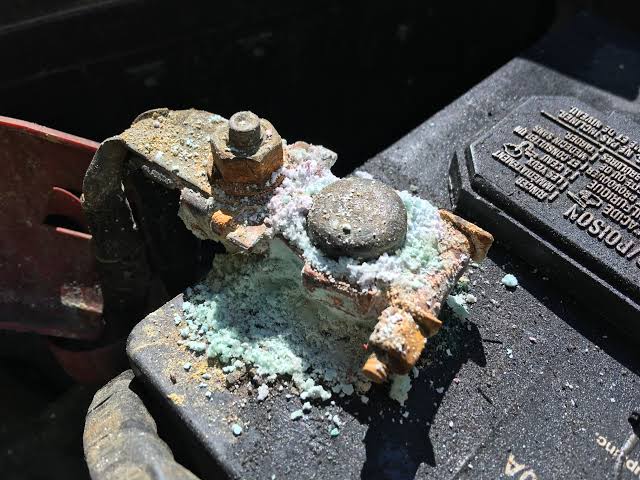
Battery corrosion can interfere with starting, charging, and dependable electrical power even when the battery itself still has usable life. Powdery buildup around the posts and cable terminals can increase resistance and weaken the connection. Cleaning it correctly and finding out why it keeps returning can prevent repeated no-start problems.
Recognize Corrosion Before It Causes Trouble
Battery-terminal corrosion often appears as white, bluish, or greenish material around the posts or cable ends. Heavy deposits may spread beneath terminal covers where they aren’t immediately visible.
Starting may become slower as resistance increases. Accessories can also behave unpredictably when the main electrical connection becomes unstable, although those symptoms aren’t specific to corrosion.
Wear eye protection and suitable gloves when working around a vehicle battery. Batteries contain corrosive electrolyte and can produce flammable gas, so keep sparks, flames, cigarettes, and inappropriate tools away.
Inspect the Battery and Cable Ends
Switch the vehicle off before beginning. If terminal removal is required, follow the correct disconnection sequence for the vehicle and avoid allowing tools to bridge battery terminals or grounded metal.
Readers looking through automotive upkeep material may see terminal cleaning presented as routine maintenance, but inspection should also include damaged cable ends, cracked battery cases, loose posts, and signs of electrolyte leakage.
Corrosion that repeatedly returns in a short period deserves more attention than a small amount of long-term surface buildup.
Clean the Terminals Thoroughly
Loose deposits should be removed using battery-safe cleaning methods and appropriate tools. The goal is to expose clean contact surfaces without damaging the post or cable terminal.
When consulting general car maintenance information, remember that cleaning the visible outside of a terminal isn’t enough if corrosion remains between the post and clamp. Electrical contact occurs at those mating surfaces.
| Condition | Possible Effect | Recommended Check |
|---|---|---|
| Light surface buildup | Early resistance | Clean and inspect |
| Heavy terminal deposits | Starting difficulty | Remove and clean clamp |
| Loose cable end | Intermittent power | Secure connection |
| Fast recurring corrosion | Underlying battery issue | Inspect battery/charging system |
Once cleaned, terminals should fit securely. A clamp that can’t tighten properly may need repair or replacement rather than repeated adjustment.
Look for the Reason Corrosion Returned
Corrosion can develop gradually during normal battery service, but rapid or excessive buildup may suggest additional problems. Battery condition, terminal sealing, charging behavior, cable damage, and environmental exposure may all deserve inspection.
Drivers exploring vehicle power-system topics should avoid assuming that every recurring deposit means the alternator is overcharging. Charging voltage should be tested before making that conclusion.
A damaged battery case or suspicious leakage is another reason to stop treating the issue as a simple cleaning job.
Why Cosmetic Cleaning Can Fail
A terminal can look clean from above while corrosion remains hidden between the clamp and battery post. Spraying cleaner around the outside without correcting that contact surface may improve appearance without restoring dependable current flow.
Another common mistake is tightening a damaged terminal harder and harder. That can deform components without solving the electrical problem. If the clamp is stretched, cracked, or severely corroded, replacement may be the more reliable repair.
Frequently Asked Questions
Can battery corrosion stop a car from starting?
Yes. Severe corrosion can increase electrical resistance enough to limit starter current or interrupt the connection completely. A weak battery, loose cable, or starter fault can produce similar symptoms.
Why does battery corrosion keep coming back?
Recurring buildup may be related to battery age, terminal condition, leakage, charging problems, or environmental exposure. Cleaning the terminals treats the deposit, but repeated corrosion deserves an inspection for the underlying cause.
Should I replace a battery because the terminals are corroded?
Not automatically. Minor terminal corrosion can occur while the battery remains serviceable. Replacement becomes more reasonable when testing shows poor battery condition, physical damage, leakage, or another failure that cleaning cannot correct.
Keep the Main Connection Dependable
Inspect battery terminals during routine under-hood checks rather than waiting for a no-start condition. Clean corrosion before it becomes heavy, make sure the cable ends remain secure, and investigate buildup that quickly returns. Reliable battery connections help both the starting and charging systems do their jobs without unnecessary resistance.